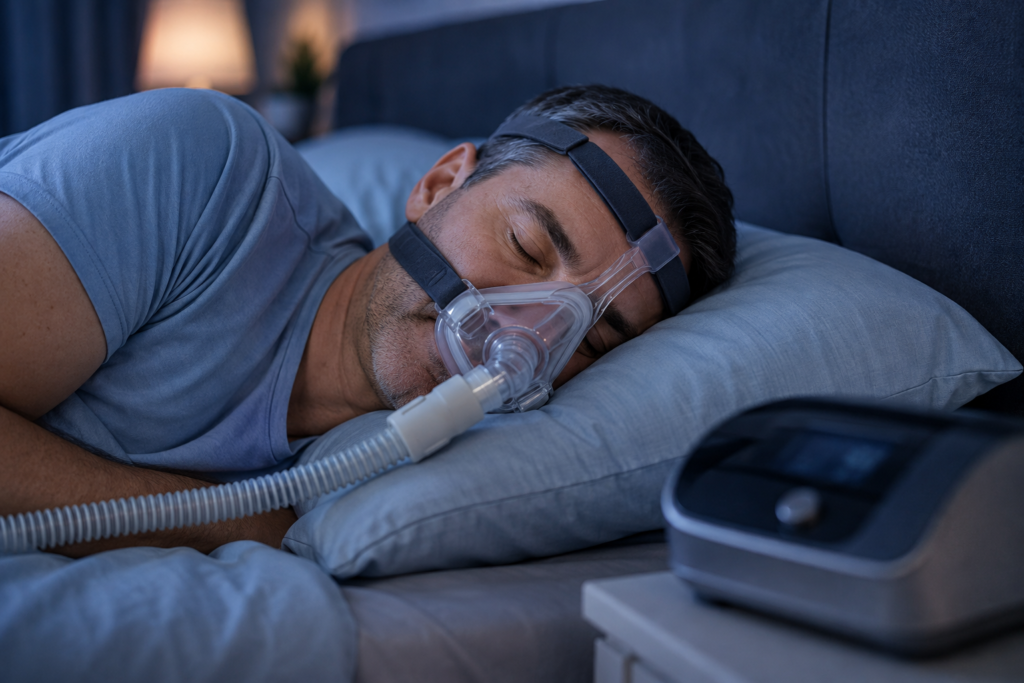
You finally get comfortable, the CPAP machine starts blowing, and then you hear it: a faint hiss near your nose, a burst of air toward your eye, or the unmistakable sound of a mask that has lost its seal.
If you keep asking, “Why does my CPAP mask leak air constantly?”, the problem usually is not the CPAP machine itself. More often, the mask is not sitting correctly on your face, the size or style is wrong, the headgear has been adjusted too tightly or loosely, or the mask and its components have simply started to wear.
A small amount of movement is normal during sleep. A persistent CPAP mask leak is different. It can disturb your sleep, dry your eyes or mouth, create irritating noise, and potentially interfere with effective CPAP therapy.
The good news is that most leaks have a practical explanation.
The most common reason: your mask does not fit correctly
A CPAP mask needs to create a seal against your face while allowing pressurized air to move into your airway. That sounds simple, but faces are not uniform, and neither are CPAP masks.
If the mask is too large, too small, positioned incorrectly, or simply the wrong shape for your face, air can escape around the cushion.
Dallas Sleep’s CPAP troubleshooting guide identifies an improperly fitted or incorrectly sized mask as a common cause of air leaking around the mask. Its guidance is to work with your durable medical equipment supplier when the mask does not fit properly. (Dallas Sleep)
That is why tightening the straps repeatedly is not always the answer. If you have to pull the headgear extremely tight to prevent a leak, the underlying problem may be fit rather than tension.
Why tightening the straps can sometimes make things worse
It is tempting to respond to a leak by pulling the straps tighter.
Sometimes that helps. Sometimes it creates a different problem.
A CPAP mask cushion needs to sit against the skin in the position for which it was designed. Excessive pressure from the headgear can distort the cushion and create small gaps. It can also leave you with pressure marks or soreness around the bridge of your nose and forehead.
Dallas Sleep specifically lists headgear that is too tight as a potential issue and recommends loosening it. The practice also identifies soreness on the forehead or bridge of the nose as a possible sign of an inappropriate mask fit. (Dallas Sleep)
The goal is not to make the mask as tight as possible. It is to make it stable enough to maintain a seal without excessive pressure.
Your sleeping position can cause a CPAP mask leak.
A mask that seals perfectly while you are lying still may leak once you start sleeping.
This is particularly noticeable for people who sleep on their sides or change positions frequently. Your pillow can push against the mask, shift the cushion, or pull on the tubing. Even a small change in the position of the mask can create an opening for pressurized air.
Dallas Sleep has previously noted that conventional pillows can contribute to mask leaks, particularly for side sleepers, because masks can shift and hoses can get in the way. (Dallas Sleep)
If your CPAP mask leaks when you move, pay attention to when it happens. If the leak appears primarily after turning onto your side, the problem may be the interaction between your pillow, tubing, and mask rather than the mask itself.
Mouth breathing can be the real problem
Not every CPAP air leak happens around the mask cushion.
If you use a nasal mask or nasal pillows but your mouth opens while you sleep, pressurized air can escape through your mouth. You may wake with a dry mouth, notice a persistent air leak, or find that your therapy becomes uncomfortable.
Dallas Sleep’s CPAP troubleshooting information lists mouth breathing as a potential reason for dry mouth and recommends discussing a chin strap or a full-face mask with a DME supplier when appropriate. (Dallas Sleep)
This is one reason mask selection matters. Someone who comfortably breathes through the nose throughout the night may do well with a nasal interface. Someone who regularly breathes through the mouth may need a different approach.
A persistent leak should therefore prompt a question beyond “How do I stop CPAP mask leaks?”
Ask whether the mask style matches the way you actually breathe while asleep.
Your mask may simply be worn out
CPAP masks are not permanent equipment.
The cushion and other soft components gradually lose their original flexibility. Oils from the skin, repeated washing, friction, and normal wear can change how the material sits against the face.
Dallas Sleep notes that mask materials can dry out and break down over time, potentially becoming less flexible or developing cracks that contribute to leaks. (Dallas Sleep)
So if your mask worked well for months and has recently started leaking despite being positioned correctly, inspect it closely.
Look for:
- Cracks or visible damage
- A cushion that feels stiff or less flexible
- Changes in the shape of the seal
- Worn headgear
- Persistent leaks despite proper adjustment
A replacement may solve the problem more effectively than continually changing the strap tension.
Cleanliness can affect the mask seal, too.
Skin oils and residue can accumulate where the mask touches your face. That buildup can affect comfort and the way the cushion sits against the skin.
Dallas Sleep recommends washing the face before putting on the mask and cleaning the CPAP mask or nasal pillows daily with warm, soapy water before rinsing and allowing them to air dry. (Dallas Sleep)
Regular cleaning is not just about hygiene. It is also part of keeping the equipment in usable condition.
Follow the cleaning and replacement instructions supplied with your particular equipment, since materials and manufacturer recommendations can differ.
What if air is leaking into your eyes?
A CPAP mask leak that blows air toward your eyes is more than an annoyance. It can leave your eyes feeling dry, irritated, or uncomfortable when you wake up.
If you notice this pattern, do not simply tighten the mask until the airflow stops.
Dallas Sleep’s troubleshooting guide identifies air leaking toward the eyes as a possible mask or headgear adjustment problem. (Dallas Sleep)
The location of the leak can actually provide useful information. Air escaping near the eyes may suggest that the upper portion of the mask is not sealing correctly. Air escaping around the mouth may point toward mouth breathing or an unsuitable mask style.
Paying attention to where the air escapes can make troubleshooting much easier.
How to get a better CPAP mask seal
If your CPAP mask is leaking, start with the basics rather than immediately changing your pressure settings.
Put the mask on according to the manufacturer’s instructions and make sure it is sitting in its intended position. Check whether the cushion is folded, twisted, or displaced. Then adjust the headgear gradually rather than pulling every strap as tight as possible.
If the leak continues, consider whether the mask is the right size and style for you.
Your sleep position matters, too. If the leak begins after you turn onto your side, check whether your pillow is pushing the mask out of position or pulling on the tubing.
And if the mask is old, inspect the cushion and other components for deterioration.
If these steps do not resolve the problem, contact your DME supplier or sleep specialist rather than repeatedly adjusting the equipment yourself.
Do not change your CPAP pressure just because the mask leaks
A leaking mask and an incorrect pressure setting are not necessarily the same problem.
If you are experiencing persistent leaks, it can be tempting to adjust the CPAP pressure on your own. That is not a good substitute for determining why the mask is leaking in the first place.
Dallas Sleep’s troubleshooting guidance recommends contacting the practice when pressure settings may need adjustment, rather than treating pressure changes as a simple mask-leak fix. (Dallas Sleep)
Pressure settings are part of your prescribed sleep apnea treatment. If your mask fit is correct but you continue to experience problems with pressure, comfort, snoring, or daytime sleepiness, discuss those changes with your sleep care team.
When should you ask a sleep specialist for help?
An occasional brief leak does not necessarily mean something is seriously wrong. The concern is a leak that happens repeatedly, wakes you up, causes significant discomfort, blows air into your eyes, or continues despite reasonable mask adjustments.
It is also worth getting help if your sleep apnea symptoms return or worsen while using CPAP.
Dallas Sleep’s CPAP program includes follow-up after treatment begins. The practice says patients bring their CPAP device and mask to the first follow-up so the team can evaluate mask fit and pressure settings and review treatment data. (Dallas Sleep)
That distinction matters. A CPAP mask is not simply something you put on and forget about. The right fit, equipment condition, pressure settings, and ongoing treatment response all matter.
Dallas Sleep provides sleep care in North Texas, including CPAP treatment and management in its Plano and McKinney offices. (Dallas Sleep)
If you are wondering why your CPAP mask keeps leaking air at night, start by looking at the fit, size, headgear, sleeping position, mask condition, and whether you breathe through your mouth while asleep. Those details often point toward the solution.
And if the leak persists, getting the mask evaluated is usually more productive than spending another night chasing the hiss around your face.