Now accepting Telehealth appointments. Schedule a virtual visit.
Now accepting Telehealth appointments. Schedule a virtual visit.
For patients with obesity and obstructive sleep apnea, medically supervised weight management may play an important role in improving sleep, breathing, and overall health.
Weight and obstructive sleep apnea are closely connected.
Excess tissue around the neck and upper airway can contribute to airway narrowing and collapse during sleep. For some patients, weight loss can significantly improve the severity of sleep apnea.
That’s why treating sleep apnea shouldn’t always stop at the CPAP machine.
At Dallas Sleep Health, we look at the bigger picture—including sleep, weight, metabolic health, lifestyle, and other medical conditions.
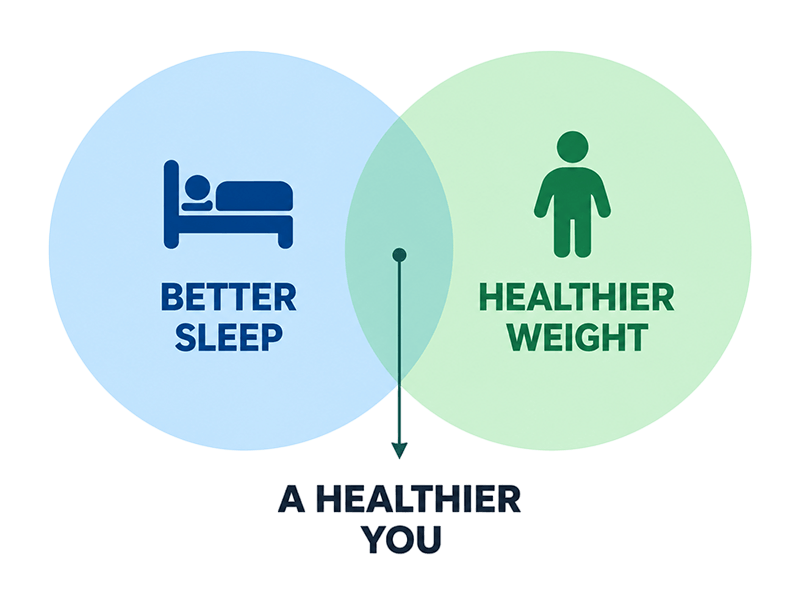

GLP-1–based medications are a newer class of medications used to help eligible patients manage obesity and related health conditions. Some newer medications work on both GLP-1 and GIP pathways. These medications can reduce appetite, increase feelings of fullness, and help patients achieve meaningful weight loss when combined with appropriate nutrition and physical activity.
In December 2024, the FDA approved Zepbound (tirzepatide) for the treatment of moderate-to-severe obstructive sleep apnea in adults with obesity, in combination with a reduced-calorie diet and increased physical activity. This was the first FDA-approved medication specifically indicated to treat OSA. In clinical trials involving adults with obesity and moderate-to-severe OSA, tirzepatide significantly reduced the number of breathing interruptions during sleep compared with placebo. This represents an important development in sleep medicine.
Medication isn’t appropriate for everyone, and treatment decisions should be individualized.
Our clinicians will review your medical history, current medications, weight, sleep apnea severity, and other factors before recommending treatment.
This is an important distinction.
Weight-loss medication can improve OSA in appropriate patients, but many patients still need PAP therapy, oral appliance therapy, or another treatment while weight loss is occurring or afterward.
Your treatment plan may include a combination of:
or, in selected patients, weight management may substantially reduce the need for other treatment over time.
Your sleep apnea should be objectively reassessed when clinically appropriate.
At Dallas Sleep Health, we don’t view weight as simply a number on a scale.
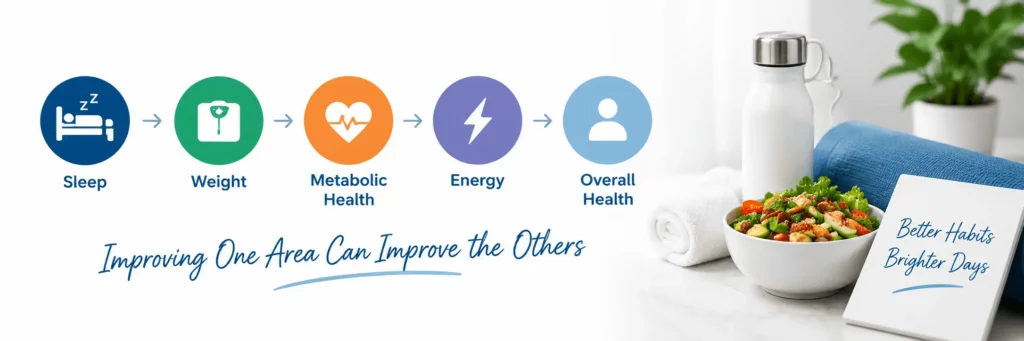
We look at the relationship between Sleep, Weight, Metabolic, Health, Energy, Overall Health.
Improving one area can positively affect the others.
Our goal is to create an individualized plan that addresses your sleep apnea while helping you achieve sustainable improvements in your health.
For eligible patients with obesity and obstructive sleep apnea, medically supervised weight management using appropriate medications may form part of a broader treatment plan. Medication is not appropriate for everyone.
Not necessarily. Weight-management treatment can be combined with CPAP, oral appliance therapy, lifestyle changes, or other sleep apnea treatments. Your sleep apnea should be reassessed when clinically appropriate.
Eligibility depends on factors such as medical history, current medications, weight, related health conditions, and individual treatment goals. A clinician should determine whether a GLP-1 or GIP-based medication is appropriate.
It may. Changes in weight and overall health can affect sleep apnea and treatment needs. Your sleep specialist can determine whether repeat evaluation or adjustment of treatment is appropriate.
Let’s treat both.
If you have sleep apnea and are struggling with your weight, Dallas Sleep Health can help you understand whether medically supervised weight management could be part of your treatment plan.

(600+ Google Reviews)