Now accepting Telehealth appointments. Schedule a virtual visit.

Oral Appliance Therapy for Sleep Apnea

A CPAP Alternative for Appropriate Patients

If you have obstructive sleep apnea but struggle with CPAP, you may have another
treatment option.

Oral Appliance Therapy uses a small, custom-fitted dental appliance worn while you
sleep. The appliance is designed to gently reposition the lower jaw and help keep the airway open, making it a potential alternative to CPAP for certain patients.

At Dallas Sleep, we start by looking at your sleep disorder, diagnosis, sleep study results, and treatment needs. If an oral appliance may be appropriate for you, we work with Sleep Rehab, a dental sleep medicine practice in Plano specializing in customized oral appliance therapy.

The goal isn’t to replace CPAP for everyone. It’s to help you find a treatment that fits your medical needs and that you can use consistently.

What Is Oral Appliance Therapy?

Oral Appliance Therapy is a non-invasive treatment option for obstructive sleep apnea and certain sleep-related breathing disorders.

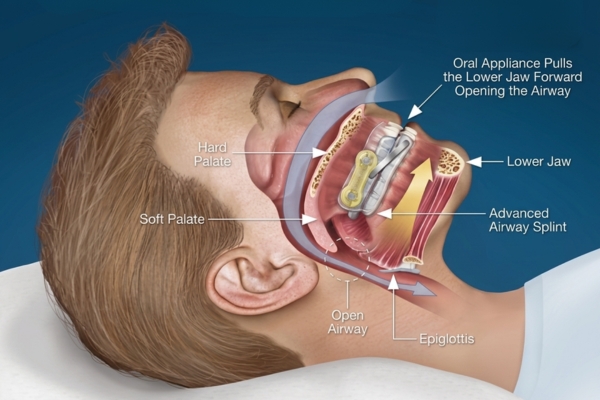
The appliance is worn inside the mouth during sleep. Most sleep apnea oral appliances work by gently moving the lower jaw forward, helping reduce the tendency of the tongue and surrounding tissues to obstruct the airway.

Unlike CPAP, an oral appliance does not require a mask, hose, machine, or electrical outlet.

Because sleep apnea is different for every patient, an oral appliance is not automatically the right choice. Your sleep specialist will evaluate your condition and determine whether this approach is appropriate for you.

Is an Oral Appliance an Alternative to CPAP?

For some patients, yes.

CPAP remains one of the most effective treatments for obstructive sleep apnea and may be particularly important for patients with more severe disease. However, some people have difficulty using CPAP consistently because of mask discomfort, leaks, claustrophobia, dryness, or other issues.

If CPAP has been difficult to tolerate, an oral appliance may be worth discussing with your sleep specialist.

The important question isn’t whether an oral appliance is universally “better” than CPAP. The question is which treatment is appropriate for your sleep apnea and realistic for you to use consistently.

CPAP vs. Oral Appliance Therapy

CPAP TherapyOral Appliance Therapy
Uses a mask and tubing
Uses a small dental appliance
Delivers positive airway pressure
Helps reposition the jaw to support the airway
Requires a CPAP machine
Does not require a bedside machine
Can be highly effective when used correctly
May be effective for appropriately selected patients
Equipment can be less convenient for travel
Compact and portable

Your sleep specialist can help determine which approach makes sense based on your diagnosis, sleep study, severity of sleep apnea, anatomy, health history, and ability to use treatment consistently.

Having Trouble With CPAP?

If you are having difficulty using CPAP, don’t stop your prescribed treatment on your own. Talk with your sleep specialist about what is making treatment difficult and what options may be appropriate for you.
Depending on your situation, your provider may be able to:

The goal is to find a treatment approach that is medically appropriate for your condition and realistic for you to use consistently.

Oral Appliance Therapy & Snoring

Oral appliances may help reduce snoring in certain patients by helping support the upper airway during sleep.
However, persistent or loud snoring can sometimes be a sign of obstructive sleep apnea, especially when it occurs with other symptoms.

Consider a sleep evaluation if you:

Why Consider Oral Appliance Therapy?

For appropriately selected patients, an oral appliance may offer practical advantages as part of a personalized sleep apnea treatment plan.

Small & Portable

Small & Portable

Compact design can make treatment convenient for patients who travel.
No Mask or Tubing

No Mask or Tubing

An oral appliance provides a different treatment approach without CPAP's mask and tubing.
Quiet at Night

Quiet at Night

No bedside CPAP machine is required.
Custom-Fitted

Custom-Fitted

The appliance is professionally selected and fitted for your individual needs.
Personialized follow-up

Personalized Follow-Up

Your dental and sleep providers can monitor fit, comfort, and treatment response.

How Does an Oral Appliance Work?

During sleep, the muscles and soft tissues surrounding the airway can relax and contribute to airway obstruction.

A sleep apnea oral appliance is designed to gently position the lower jaw forward. This can help reduce the tendency of the tongue and surrounding tissues to block the airway.

With the airway better supported, airflow may improve and breathing interruptions associated with obstructive sleep apnea may be reduced.

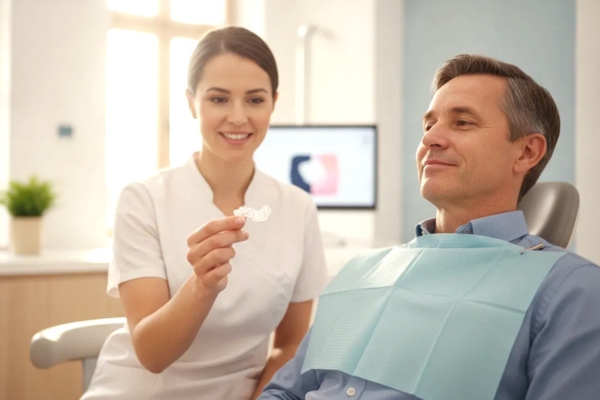
Because the appliance needs to work with your individual anatomy, professional evaluation, fitting, adjustment, and follow-up are important.

Your Oral Appliance Therapy Journey

From sleep evaluation to follow-up, our team works with you every step of the way to provide coordinated sleep and dental care.
Sleep Evaluation

Sleep Evaluation

Dallas Sleep evaluates your symptoms, sleep history, and sleep testing.
Diagnosis and treatment planning

Diagnosis & Treatment Planning

Your sleep specialist discusses appropriate treatment options.
Dental Evaluation

Dental Evaluation

If appropriate, you can be evaluated by Sleep Rehab for dental sleep medicine treatment.
Custom Appliance

Custom Appliance

Sleep Rehab provides and fits the customized oral appliance.
Adjustment

Adjustment

The appliance can be adjusted as you become accustomed to treatment.
Follow-up and monitoring

Follow-Up & Monitoring

Your providers monitor your progress and may recommend follow-up sleep testing when appropriate.

Who May Benefit From Oral Appliance Therapy?

Oral appliance therapy may be considered for adults with obstructive sleep apnea who meet appropriate clinical criteria.

It may be an option if you:

Not everyone with sleep apnea is a candidate for oral appliance therapy. Your sleep specialist should determine whether it is an appropriate treatment for your particular condition.

Dallas Sleep + Sleep Rehab: Coordinated Sleep and Dental Care

Oral appliance therapy sits at the intersection of sleep medicine and dental sleep medicine. That’s why coordination between the two can be important.

At Dallas Sleep, your sleep disorder is evaluated from a medical perspective. Your symptoms, sleep history, diagnosis, and sleep testing are reviewed to help determine the most appropriate treatment options.

When oral appliance therapy is appropriate, Dallas Sleep works with Sleep Rehab for the dental portion of treatment. Sleep Rehab specializes in customized oral appliances for sleep apnea and snoring, including appliance fitting, adjustments, and dental follow-up.

Are There Any Side Effects or Considerations?

Like any treatment, oral appliance therapy may have potential side effects.

Some patients may experience:

Frequently Asked Questions

Not necessarily. CPAP is highly effective for many people with obstructive sleep apnea. Oral appliance therapy is another treatment option that may be appropriate for selected patients, particularly those who have difficulty tolerating CPAP or meet other clinical criteria.

The best treatment depends on your diagnosis and individual circumstances.

For some patients, oral appliance therapy may be an alternative to CPAP. However, you should not stop using prescribed CPAP without first discussing your treatment with your sleep specialist.

Your provider can determine whether an oral appliance or another treatment is appropriate.

Oral appliance therapy is commonly considered for mild to moderate obstructive sleep apnea. Its suitability for more severe cases depends on the individual patient and clinical circumstances.

Your sleep specialist should determine whether it is an appropriate option.

No. A sleep apnea oral appliance is professionally designed and fitted to help address airway obstruction during sleep. A generic over-the-counter mouthguard is not a substitute for evaluation and treatment.

Many patients find an oral appliance easier to wear than a CPAP mask, but comfort varies from person to person. Proper fitting and adjustments are important.

Adjustment time varies. Your dental sleep provider can help make appropriate adjustments as you become accustomed to wearing the appliance.

Yes. Follow-up is an important part of treatment. Your provider may evaluate the appliance's fit, your comfort, symptoms, and treatment response. Follow-up sleep testing may also be recommended when appropriate.

One advantage is its compact size. An oral appliance does not require a CPAP machine, hose, or electrical outlet, which can make it convenient for travel.

Explore More Sleep Services

Snoring

More Info

Sleep Apnea

More Info

BIPAP

More Info

Fatigue

More Info

Sleep Disorders in Children

More Info

Sleep Studies

More Info

Home Sleep Testing

More Info

Take the First Step Toward Better Sleep