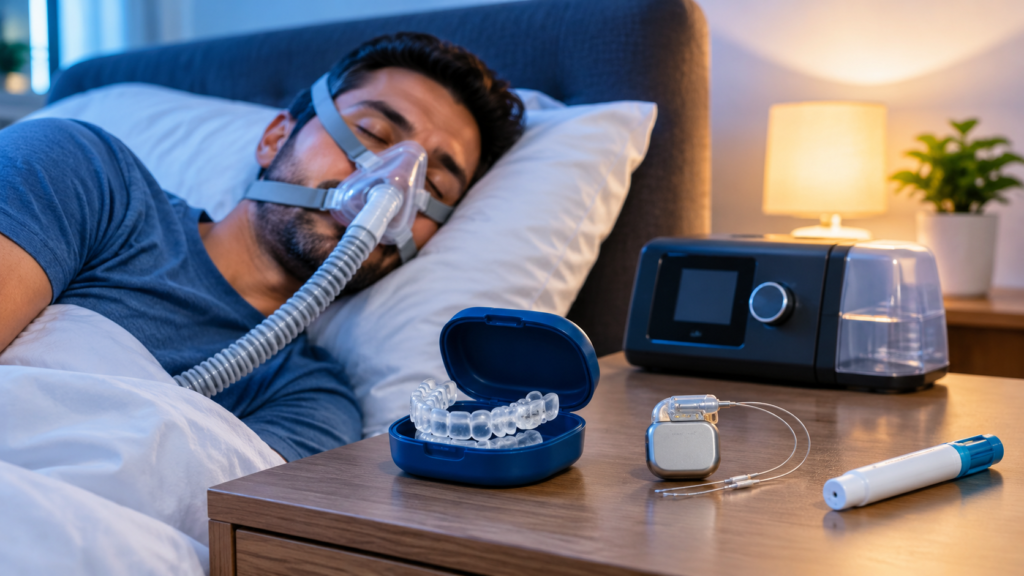
Exploring sleep apnea treatment options beyond CPAP? Learn about oral appliance therapy, hypoglossal nerve stimulation, GLP-1 medications, and sleep testing in Dallas, Plano, Frisco, and McKinney.
Getting used to CPAP therapy can be difficult, even after a sleep apnea diagnosis. Some people struggle with the mask; others find the airflow uncomfortable, while many wake up during the night because of dry mouth, congestion, or trouble keeping the equipment on.
It can become frustrating when you are trying to get better sleep, but the treatment itself is affecting your comfort.
However, stopping treatment is not the answer. You still need to manage sleep apnea, even if your first treatment does not work as expected. The good news is that CPAP is not your only option. A sleep specialist can recommend other approaches based on your condition, medical history, and individual needs.
So, what are the alternatives to CPAP? And how do you know which treatment might work for you?
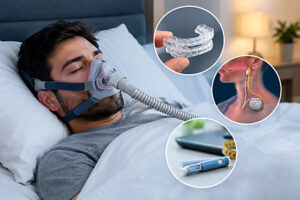
Let’s look at some of the options, including oral appliance therapy, hypoglossal nerve stimulation, and GLP-1 medications for sleep apnea.
First, Is It Really Sleep Apnea? Understanding Your Sleep Test
Before choosing a treatment, it is important to understand what is happening while you sleep. Snoring, waking up tired, morning headaches, and daytime sleepiness can be signs of obstructive sleep apnea (OSA), but these symptoms alone cannot confirm the condition.
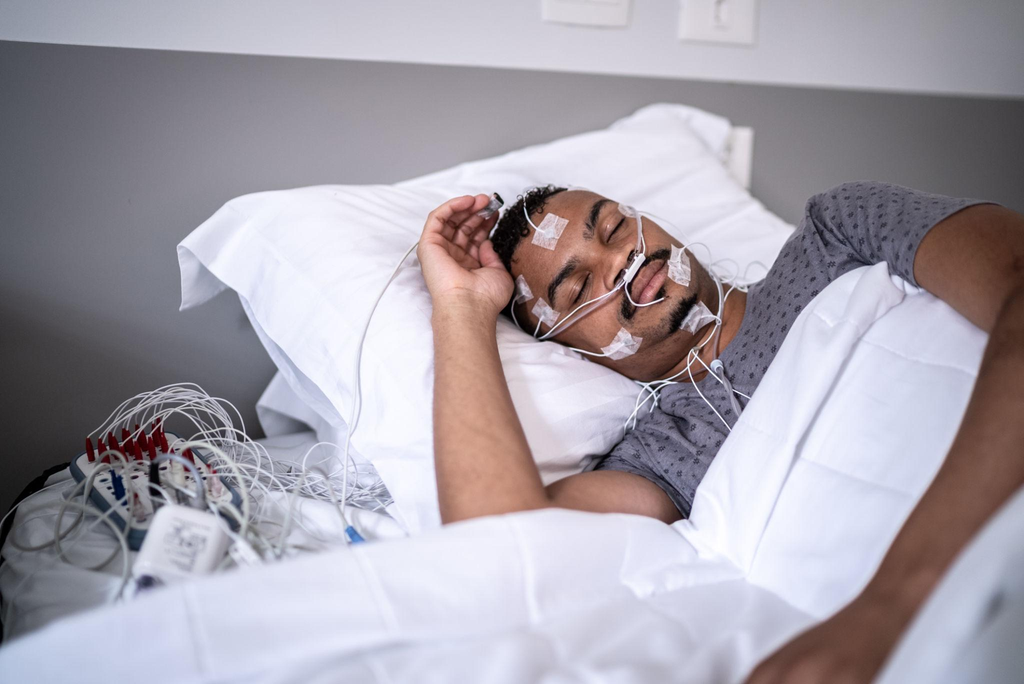
A sleep evaluation and diagnostic test help determine whether sleep apnea is present and how severe it may be. Your doctor may recommend a Home Sleep Apnea Test vs. an In-Lab Sleep Study, depending on your symptoms, medical history, and risk factors.
A home sleep apnea test is usually performed while you sleep in your own bed. The device may record information such as breathing effort, airflow, blood oxygen levels, and pulse rate. It can be a convenient way to evaluate suspected obstructive sleep apnea in adults who are appropriate for home testing.
An in-lab sleep study, also called polysomnography, is performed overnight in a sleep laboratory. It collects more detailed information, including brain activity, breathing patterns, oxygen levels, heart rate, eye movements, and leg movements. This makes it useful when a more comprehensive evaluation is needed or when another sleep disorder is suspected.
Which test is better? Neither is automatically better for everyone. A home test may be suitable for an otherwise uncomplicated adult with suspected moderate-to-severe OSA. An in-lab study may be recommended for people with certain medical conditions or more complex symptoms.
One important point: a negative or inconclusive home sleep apnea test does not always rule out sleep apnea. If symptoms and clinical suspicion remain, an in-lab sleep study may be needed.
The American Academy of Sleep Medicine’s diagnostic testing guidelines explain when home testing and polysomnography should be considered.
Dallas Sleep Health offers home sleep testing and in-lab sleep studies to help patients understand their sleep concerns and identify the next steps.
1. Oral Appliance Therapy for Sleep Apnea
Not everyone feels comfortable sleeping with a CPAP mask. For some patients, a smaller device that fits inside the mouth may be a more practical option.
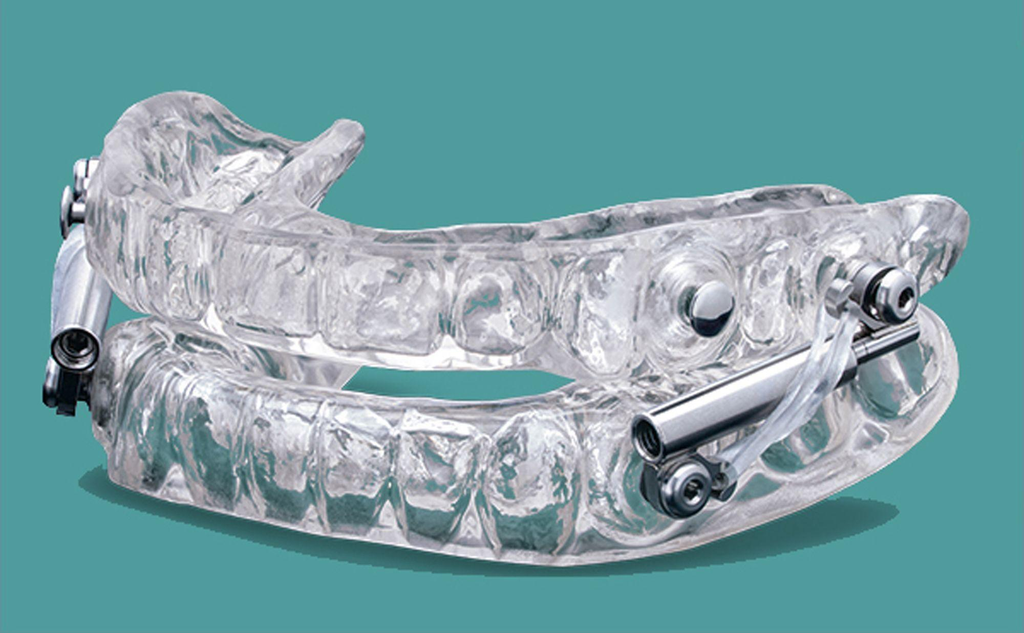
Oral Appliance Therapy for Sleep Apnea uses a custom-made dental device worn during sleep. The appliance gently moves the lower jaw forward, helping keep the upper airway open and reducing the chances of it becoming blocked.
It does not require a mask, air pressure, or connecting tubes. This is one reason some people find it easier to use, particularly when travelling or sleeping away from home.
Oral appliance therapy may be considered for adults with mild to moderate obstructive sleep apnea. It can also be an option for certain patients with more severe OSA who cannot tolerate CPAP or prefer an alternative after discussing the available treatments with their doctor.
The appliance needs to be properly fitted and adjusted. A generic mouthguard or an over-the-counter anti-snoring device is not the same as a custom oral appliance prescribed for sleep apnea.
There are a few things to keep in mind. Some patients experience jaw discomfort, tooth movement, changes in their bite, or increased saliva or dry mouth. Regular dental follow-up is important, and a follow-up sleep test may be recommended to check whether the appliance is controlling the condition.
If CPAP has been difficult to use, it may be worth discussing whether oral appliance therapy is appropriate for you. You can learn more about oral appliance therapy at Dallas Sleep Health.
2. Hypoglossal Nerve Stimulation for Sleep Apnea
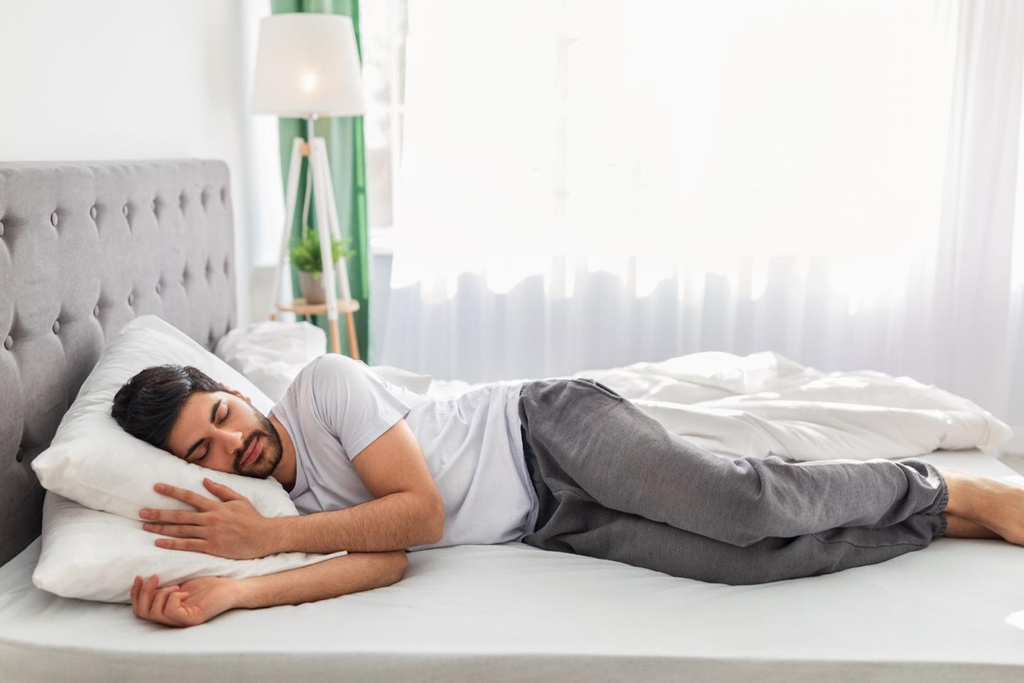
Another option for selected patients who struggle with CPAP is hypoglossal nerve stimulation. Unlike an oral appliance, this treatment involves an implanted device.
The hypoglossal nerve controls tongue movement. During sleep, the tongue can contribute to airway obstruction in some people with obstructive sleep apnea. Hypoglossal nerve stimulation works by sending gentle electrical signals to this nerve, helping move the tongue forward and keep the airway more open during sleep.
The system is implanted through a surgical procedure and is generally activated after the patient has had time to recover. When switched on at bedtime, it works in coordination with the person’s breathing.
This treatment may be considered for certain adults with moderate-to-severe obstructive sleep apnea who cannot use or tolerate PAP therapy. However, it is not suitable for everyone.
A sleep specialist needs to review the patient’s sleep study, medical history, airway anatomy, and previous treatment experience. Additional assessments may be required to determine whether the airway is suitable for this type of treatment. Specific eligibility requirements also depend on the device being considered.
It is important to understand that hypoglossal nerve stimulation is not a simple replacement for CPAP that anyone can choose. It involves surgery, device management, and follow-up appointments. Patients also need to be evaluated to determine whether the expected benefits justify the procedure.
For people who meet the necessary criteria, it can offer another way to manage obstructive sleep apnea without wearing a CPAP mask every night.
Dallas Sleep Health evaluates patients who may be candidates for implantable treatments. Find out more about hypoglossal nerve stimulation for sleep apnea.
3. GLP-1 Medications for Sleep Apnea
Weight and sleep apnea are connected, although excess weight is not the only reason someone develops the condition. In some people, additional tissue around the neck and upper airway can contribute to airway narrowing during sleep.
This is where weight management may become part of the treatment plan.
GLP-1 medications for sleep apnea have received attention because certain medications can help eligible patients lose weight and improve related health conditions. Some newer medicines also act on the GIP pathway.
An important development came in December 2024, when the U.S. Food and Drug Administration approved tirzepatide, sold under the brand name Zepbound, for adults with obesity and moderate-to-severe obstructive sleep apnea. It is prescribed alongside a reduced-calorie diet and increased physical activity.
This approval matters because it introduced a medication specifically indicated for certain adults with OSA and obesity. Clinical studies found that tirzepatide reduced sleep apnea severity in the patients studied.
However, this does not mean that every person with sleep apnea should take a GLP-1 medication. Eligibility depends on factors such as weight, medical history, other health conditions, and potential medication risks. These medicines can also cause side effects, including gastrointestinal problems, and require medical supervision.
Another point worth understanding is that weight-loss medication does not automatically replace CPAP or other sleep apnea treatments. Some patients may still need their existing therapy while losing weight. Their sleep apnea should be reassessed when appropriate before any treatment changes are made.
For people with obesity and obstructive sleep apnea, medically supervised weight management may be one part of a broader treatment plan.
You can explore GLP-1 treatment for sleep apnea at Dallas Sleep Health. For the medication’s approved indication, see the FDA announcement on Zepbound and obstructive sleep apnea.
4. A Personalized Treatment Plan May Include More Than One Approach
Finding the right sleep apnea treatment is not always about choosing one device or medication. Some patients may benefit from a combination of approaches, depending on their diagnosis and response to treatment.
For example, a patient may continue PAP therapy while working on weight management. Another may be evaluated for an oral appliance after having difficulty using CPAP. Someone with moderate-to-severe OSA who cannot tolerate PAP may be assessed for an implantable treatment.
The important thing is to avoid assuming that one treatment will work for everyone.
Your sleep study results, symptoms, medical history, airway anatomy, and previous experience with treatment all matter. A treatment that works well for one person may not be suitable for another.
If you have already been diagnosed with sleep apnea but are still struggling with treatment, it is worth discussing your options with a sleep specialist rather than simply giving up on therapy.
Finding Sleep Apnea Treatment in Dallas and North Texas
Living with sleep apnea can affect more than your nights. Poor sleep can leave you tired during the day, make it harder to concentrate, and affect your overall quality of life. Finding a treatment that you can use consistently is an important part of managing the condition.
Dallas Sleep Health provides sleep evaluations, diagnostic testing, and personalized sleep apnea treatment options for patients in Dallas, Plano, Frisco, and McKinney, Texas.
Depending on your diagnosis and individual needs, the team can help you explore options such as CPAP/PAP therapy, oral appliance therapy, medically supervised weight management, and hypoglossal nerve stimulation.
If CPAP has not worked well for you, or you are experiencing symptoms that could indicate sleep apnea, consider scheduling an evaluation.
Visit Dallas Sleep Health to learn more about available services and request an appointment.
Frequently Asked Questions About Sleep Apnea Treatment
1. What are the alternatives to CPAP for sleep apnea?
Depending on the type and severity of sleep apnea, alternatives may include custom oral appliance therapy, medically supervised weight management, and hypoglossal nerve stimulation for eligible patients. Your sleep specialist can help determine which options are appropriate.
2. Can oral appliance therapy treat sleep apnea?
Yes. A custom oral appliance can help manage obstructive sleep apnea in selected patients by moving the lower jaw forward and helping keep the airway open. It is often considered for people with mild to moderate OSA or those who cannot tolerate CPAP. Follow-up testing is important to check whether the treatment is effective.
3. Who is a candidate for hypoglossal nerve stimulation?
It may be an option for certain adults with moderate-to-severe obstructive sleep apnea who cannot use or tolerate PAP therapy. Eligibility depends on sleep study results, airway anatomy, medical history, and the criteria for the specific implantable device. A comprehensive evaluation is necessary.
4. Can GLP-1 medications help with sleep apnea?
Certain medications may help eligible adults with obesity and obstructive sleep apnea. Tirzepatide (Zepbound) is FDA-approved for moderate-to-severe OSA in adults with obesity, alongside a reduced-calorie diet and increased physical activity. Medication decisions should be made with a healthcare professional.
5. What is the difference between a home sleep apnea test and an in-lab sleep study?
A home sleep apnea test records selected breathing-related measurements while you sleep at home. An in-lab sleep study monitors more body functions, including brain activity, breathing, oxygen levels, and movements. The right test depends on your symptoms and medical history.
6. Can a home sleep apnea test miss sleep apnea?
Yes. A home test can sometimes produce a negative, inconclusive, or technically inadequate result even when symptoms suggest sleep apnea. Your doctor may recommend an in-lab sleep study if clinical suspicion remains.
7. Do I have to use CPAP for the rest of my life?
Not necessarily, but you should not stop CPAP without discussing it with your sleep specialist. Some patients may become candidates for other treatments or need their treatment plan adjusted over time. A follow-up evaluation and appropriate sleep testing can help determine whether a change is safe.
8. Where can I get sleep apnea testing and treatment in Dallas?
Dallas Sleep Health provides sleep evaluations and treatment options for patients in Dallas and surrounding North Texas communities, including Plano, Frisco, and McKinney. Visit the locations page or contact the clinic to learn about appointments and available services.
This article is for educational purposes and is not a substitute for medical advice, diagnosis, or treatment. Sleep apnea testing and treatment decisions should be made with a qualified healthcare professional.
- Sleep apnea treatment options
- Sleep testing
- Oral appliance therapy
- Hypoglossal nerve stimulation
- GLP-1 treatment for sleep apnea
- Dallas Sleep Health locations