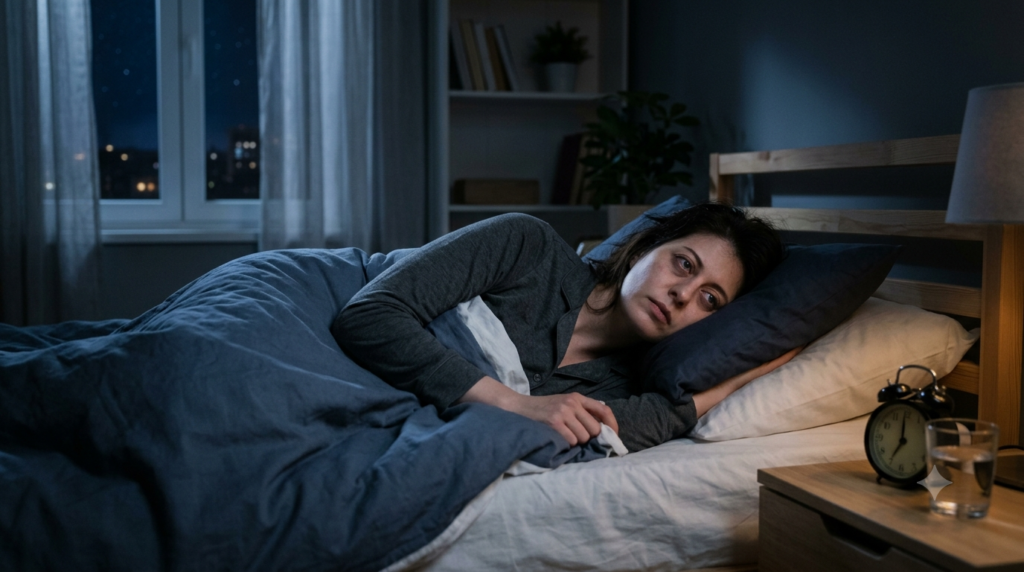
You know the feeling: you have been awake since early morning, your body feels heavy, your eyes are tired, and you are looking forward to getting into bed. But when the lights go out, sleep does not come.
You turn over, check the clock, and tell yourself to stop thinking about tomorrow. Instead, you become even more aware that you’re still awake.
So, why can’t you fall asleep even though you’re exhausted?
Being physically tired and being ready for sleep are not always the same thing. Your ability to fall asleep depends on several systems working together, including your sleep drive, internal body clock, level of mental alertness, environment, habits, and overall health. When those systems are out of sync, you can feel completely worn out while your brain remains surprisingly alert.
Sometimes this happens after a stressful day or a disrupted schedule and resolves on its own. When it becomes a recurring pattern, however, it may point to insomnia or another sleep problem that deserves closer attention.
Being exhausted does not always mean your brain is ready for sleep
Sleep is not simply a matter of running out of energy.
Throughout the day, your body builds up a biological drive to sleep. At the same time, your circadian rhythm helps determine when your body is naturally more inclined to be awake or asleep. These systems normally work together, but they can become misaligned.
For example, you might stay awake late working, studying, traveling, or using your phone. By bedtime, you may feel exhausted, but your internal clock may not be signaling that it is time to sleep yet.
This is one reason someone can say, “I’m tired, but I can’t sleep,” without exaggerating. The sensation of fatigue and the biological process that initiates sleep are related, but they are not identical.
Stress can leave the body tired while keeping the mind switched on
One of the most common explanations for being exhausted but unable to fall asleep is mental arousal.
You may feel physically drained after a long day, yet your mind keeps replaying an argument, planning tomorrow’s meeting, worrying about money, or anticipating an important event.
Stress and worry are recognized risk factors for insomnia. In some people, the problem can become self-reinforcing: after several bad nights, bedtime itself begins to create anxiety because you are already expecting another sleepless night.
That can change the experience of your bedroom. Instead of associating the bed with sleep, you start associating it with trying to sleep.
And trying harder does not necessarily help.
The more closely you monitor whether you are falling asleep, the more alert you may become. Watching the clock can make this worse, particularly when you start calculating how many hours of sleep you have left.
Your sleep schedule may be working against you
A changing sleep schedule can make falling asleep more difficult even when you are tired.
An inconsistent sleep schedule can disrupt your sleep-wake cycle. Going to bed at different times, sleeping late on weekends, taking long naps, working night shifts, or traveling across time zones can all contribute. Light exposure and changes in your daily routine can also shift when your body expects to sleep or wake.
Consider someone who normally goes to bed at 10:30 p.m. but stays up until 1 or 2 a.m. several nights in a row. When they eventually return to their normal bedtime, they may feel tired but find that sleep does not arrive immediately.
The problem may not be that their body has forgotten how to sleep. Their timing has simply shifted.
Caffeine, nicotine, alcohol, and late-day habits can matter
Sometimes the reason is less mysterious than it feels.
Caffeine can stay in your body for hours, so an afternoon or evening coffee may affect your sleep even if you do not feel stimulated. Nicotine can also make it harder to sleep. Alcohol may make you feel sleepy at first, but it can disrupt sleep later in the night.
Other habits can play a role too. Long naps, too little daytime physical activity, irregular schedules, and using electronic devices close to bedtime are among the factors associated with sleep difficulties.
That does not mean every person who drinks coffee at 4 p.m. will have insomnia. Sleep is individual. The useful question is whether a particular habit consistently appears alongside your difficulty falling asleep.
Sometimes the problem is the environment.
A bedroom does not have to be dramatically uncomfortable to interfere with sleep.
Light from the window, street noise, an uncomfortable temperature, a partner’s movements, or an irregular household schedule can make it harder to fall asleep. These factors can have a greater impact if you are sensitive to changes in your sleep routine.
A good sleep environment should be dark, quiet, and comfortable. Keep your bedroom focused on rest rather than work or entertainment.
Medications and health conditions can also affect sleep
Difficulty falling asleep is not always caused by lifestyle or stress.
Some medications can interfere with sleep, while certain health conditions can make it harder to become or remain asleep. Hormonal changes, mental health conditions, chronic pain, and other medical problems may all be relevant depending on the person.
This is why persistent sleep difficulty should not automatically be dismissed as poor sleep hygiene.
A clinician may ask about your medications, caffeine and alcohol use, medical history, sleep schedule, and symptoms such as snoring or gasping during sleep. Based on these findings, they may recommend additional testing.
Could sleep apnea be part of the problem?
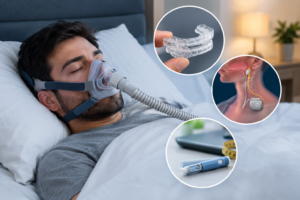
Many people associate sleep apnea with loud snoring and pauses in breathing. However, sleep-related breathing problems can cause a wider range of symptoms.
Sleep apnea may be associated with daytime tiredness, fatigue, headaches, insomnia, repeated nighttime urination, gasping for air, and disrupted sleep. Some people may not realize that their breathing is stopping during sleep because the symptoms occur while they are unconscious.
That creates an important distinction.
If your sleep keeps getting disrupted, simply spending more time in bed may not fix the underlying problem.
If you snore loudly, wake up choking or gasping, have witnessed pauses in breathing, or remain unusually tired despite getting what seems like enough time in bed, it is worth discussing those symptoms with a healthcare professional.
What can you do when you are tired but can’t sleep?
The answer is not necessarily to stay in bed and force yourself to sleep.
If you lie awake for a long time, get up briefly and do something quiet in low light. This can be more helpful than staying in bed and growing frustrated. The goal is to keep your bed associated with sleep rather than hours of wakefulness and worry.
Keep your wake-up time consistent when possible. Limit caffeine and nicotine near bedtime. Avoid long daytime naps, and give yourself time to relax before bed.
But there is an important distinction between basic sleep habits and treatment for chronic insomnia.
Good sleep habits can support healthy sleep, but they may not resolve persistent insomnia. The American Academy of Sleep Medicine recommends cognitive behavioral therapy for insomnia (CBT-I) as a first-line treatment for adults with chronic insomnia. CBT-I targets thoughts and behaviors that can interfere with sleep. Treatment may include stimulus control, sleep scheduling, relaxation techniques, and cognitive strategies.
When should you be concerned about trouble falling asleep?
One difficult night is not necessarily a sleep disorder. Even people who normally sleep well can have occasional nights when stress, travel, illness, or a change in routine keeps them awake.
The pattern matters more than a single night.
Chronic insomnia generally means you have trouble falling asleep, staying asleep, or waking too early at least three nights a week for three months or longer, even when you have enough time and the right conditions for sleep.
If you often struggle to fall asleep, wake up tired, or have trouble concentrating during the day, talk with a healthcare professional. Growing anxiety about bedtime is another reason to seek help.
Consider a sleep evaluation if insomnia occurs with loud snoring, gasping, or pauses in breathing. Daytime sleepiness or unusual nighttime symptoms also warrant attention.
The goal isn’t to become better at forcing yourself to sleep
It is tempting to think that the solution is simply to become more disciplined about bedtime.
Sleep does not quite work that way.
If you’re exhausted but still can’t fall asleep, ask a different question: “What is keeping my body and mind from falling asleep normally?”
The answer may be stress, an inconsistent schedule, caffeine, medication, or your sleep environment. In some cases, persistent insomnia develops into a cycle where worrying about sleep becomes part of the problem. Symptoms that resemble insomnia can also point to another sleep disorder, such as sleep apnea, and may require further evaluation.
Finding the cause changes what you do next. A few adjustments may help after an occasional restless night. If the problem keeps returning, identifying the cause is more useful than watching the clock and hoping exhaustion takes over.