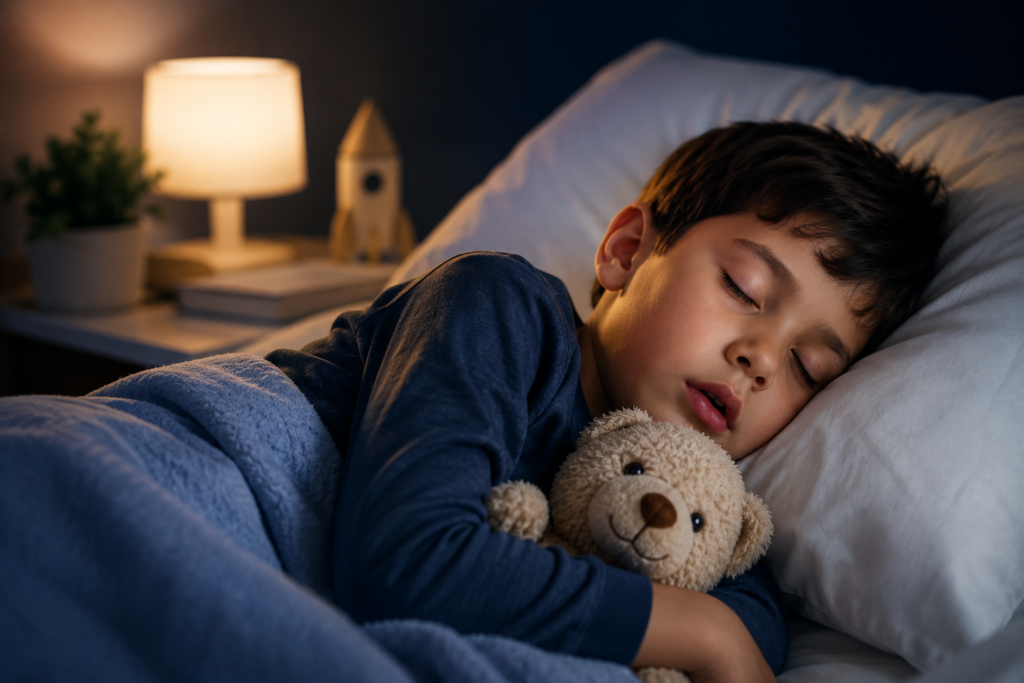
Pediatric Sleep Apnea: Signs, Diagnosis, and Treatment for Children
Pediatric sleep apnea and other sleep-related breathing disorders are often overlooked in children. Symptoms such as snoring, sleepwalking, restless sleep, behavioral problems, and daytime fatigue may indicate an underlying sleep disorder. An overnight sleep study remains the gold standard for diagnosing sleep apnea in children.
When I sat down to write my first blog post, I considered several topics but struggled to decide where to begin. Ultimately, I realized there was no better place to start than with children’s sleep health.
Healthy sleep is essential for a child’s growth, learning, emotional well-being, and overall development. Yet sleep disorders in children frequently go undiagnosed because the symptoms can be subtle or easily mistaken for normal childhood behaviors.
Why Children’s Sleep Health Matters
Many parents have experienced their child sleepwalking, talking in their sleep, or having restless nights. In some cases, these episodes eventually resolve on their own. However, an important question often remains unanswered: Why did these sleep disturbances occur in the first place?
Based on available research and years of clinical experience, sleepwalking and other nighttime disturbances can sometimes be signs of an underlying sleep-related breathing disorder. This may include obstructive sleep apnea or milder forms of sleep-disordered breathing.
Symptoms vary considerably among children. Some children snore loudly, while others may not snore at all. Because symptoms are not always obvious, identifying sleep problems can be challenging.
Unfortunately, discussions about sleep quality and snoring are not always part of routine pediatric visits. As a result, many children with sleep disorders remain undiagnosed and untreated.
Common Signs and Symptoms of Sleep Disorders in Children
Parents should consider discussing sleep concerns with a healthcare provider if their child experiences any of the following:
- Loud or habitual snoring
- Sleepwalking
- Restless or disrupted sleep
- Night terrors
- Bedwetting
- Pauses in breathing during sleep
- Mouth breathing during sleep
- Excessive daytime sleepiness
- Hyperactivity or behavioral issues
- Difficulty concentrating or learning problems
- Morning headaches
- Irritability or mood changes
Even if your child does not snore, persistent sleep disturbances should not be ignored.
How Is Sleep Apnea Diagnosed in Children?
The most reliable way to determine whether a child has a significant sleep disturbance or sleep-related breathing disorder is through an overnight sleep study, also known as polysomnography.
During the study, the child spends the night in a sleep laboratory accompanied by a parent or caregiver. Typically, the child sleeps independently in the bed while the parent remains nearby in a recliner.
Parents are often relieved to learn that a sleep study is completely painless and non-invasive. No needles are involved.
Small sensors are placed on the child’s head, neck, chest, and body to monitor:
- Brain activity (EEG)
- Sleep stages
- Breathing patterns
- Heart rate
- Oxygen levels
- Body movements
The sensors attached to the scalp help determine whether the child is awake or asleep and identify different stages of sleep, including deep sleep.
An overnight sleep study provides clear, objective evidence regarding whether a sleep-related disorder is present and helps guide the most appropriate treatment plan.
Choosing a Quality Sleep Lab
Not all sleep laboratories provide the same level of care.
When selecting a sleep center for your child, it is important to consider whether the laboratory has received accreditation from recognized sleep medicine organizations. Accreditation helps ensure that the facility meets established quality standards.
Families may also benefit from:
- Asking for recommendations from trusted healthcare providers
- Reading patient reviews
- Researching physician-led sleep centers
- Choosing a sleep center with on-site physician oversight
Sleep laboratories that are integrated within a physician’s practice often provide greater continuity of care throughout diagnosis and treatment.
Are Home Sleep Tests Recommended for Children?
Home sleep testing has become increasingly popular for adults, particularly when there is a strong suspicion of moderate to severe obstructive sleep apnea.
However, home sleep testing is generally not recommended for children.
Children often experience milder or more subtle breathing abnormalities that home testing may fail to detect accurately. In addition, children frequently move during sleep, increasing the likelihood that sensors will become displaced during the night.
As a result, home sleep studies in children often produce incomplete or poor-quality data.
In a sleep laboratory, a trained sleep technologist continuously monitors the child throughout the night and can replace sensors if they become loose. This attended environment results in more reliable and accurate testing.
Treatment Options for Pediatric Sleep Apnea
If a sleep study confirms sleep apnea or another sleep-related breathing disorder, treatment options should be discussed with your physician.
Tonsillectomy and Adenoidectomy
For many children, surgical removal of the tonsils and adenoids is considered the first-line treatment.
This procedure frequently leads to significant improvement and, in some cases, complete resolution of sleep apnea symptoms.
Because some children continue to experience symptoms after surgery, a follow-up sleep study is often recommended approximately two to three months after the procedure.
Orthodontic Treatment
Certain children may benefit from orthodontic interventions, including maxillary expansion, which may help improve airway size and breathing during sleep.
CPAP Therapy
Some children and adolescents continue to have sleep apnea despite surgery or may not be candidates for surgery at all.
In these situations, Continuous Positive Airway Pressure (CPAP) therapy may be recommended.
Although CPAP treatment can be more challenging in children than in adults, many families achieve excellent results with proper education, support, and consistency.
Successful CPAP therapy requires a team effort involving the child, parents, and healthcare providers. During the first few weeks of treatment, parents may need to periodically check that the mask remains in place throughout the night.
The more consistently CPAP is used, the greater the potential benefits for the child’s health, sleep quality, behavior, and overall well-being.
Expert Pediatric Sleep Care in North Texas
At Dallas Sleep, children with sleep concerns receive comprehensive evaluations designed to identify and treat the underlying cause of their symptoms.
Raj Kakar, MD, MPH, DABSM, FACP, founder and Medical Director of Dallas Sleep, is a board-certified sleep medicine physician who completed fellowship training at the renowned Stanford University Sleep Center of Excellence. Since 2006, Dr. Kakar has helped patients throughout Plano, Dallas, Frisco, McKinney, and surrounding North Texas communities achieve better sleep and improved quality of life.
Dr. Kakar has extensive experience diagnosing and treating pediatric sleep disorders, including obstructive sleep apnea, sleepwalking, insomnia, restless sleep, and excessive daytime sleepiness. Dallas Sleep provides physician-supervised, accredited sleep studies and personalized treatment plans tailored to each child’s unique needs.
When Should Parents Seek Help?
Parents should consider scheduling an evaluation with a sleep specialist if their child:
- Snores regularly
- Experiences restless or disrupted sleep
- Sleepwalks frequently
- Has witnessed pauses in breathing during sleep
- Exhibits daytime behavioral or learning difficulties
- Appears excessively tired during the day
Early diagnosis and treatment can significantly improve a child’s health, development, academic performance, and overall quality of life.
Frequently Asked Questions
Can children develop sleep apnea?
Yes. Children of all ages can develop obstructive sleep apnea. Enlarged tonsils and adenoids are among the most common causes, although other factors may also contribute. Untreated sleep apnea can negatively affect growth, behavior, learning, and overall health.
Is snoring normal in children?
Occasional snoring may occur, but frequent or loud snoring is not considered normal. Habitual snoring may be a sign of an underlying sleep-related breathing disorder and should be evaluated by a sleep specialist.
What symptoms of sleep apnea should parents watch for?
Common symptoms include loud snoring, restless sleep, sleepwalking, bedwetting, mouth breathing, hyperactivity, irritability, difficulty concentrating, and pauses in breathing during sleep.
How are sleep disorders in children diagnosed?
Diagnosis typically begins with a comprehensive evaluation by a sleep specialist, followed by an overnight sleep study when appropriate. An in-lab sleep study remains the gold standard for diagnosing pediatric sleep apnea.
Are home sleep tests accurate for children?
In most cases, no. Home sleep testing is generally not recommended for children because it may not accurately detect mild or subtle breathing abnormalities.
What happens during a pediatric sleep study?
During an overnight sleep study, sensors monitor brain activity, breathing patterns, oxygen levels, heart rate, body movements, and sleep stages while your child sleeps. The study is painless, non-invasive, and supervised by trained sleep technologists.
What treatments are available for pediatric sleep apnea?
Treatment depends on the underlying cause and severity. Options may include tonsillectomy and adenoidectomy, orthodontic treatment, lifestyle modifications, or CPAP therapy for persistent sleep apnea.
When should I bring my child to a sleep specialist?
Parents should seek an evaluation if their child snores regularly, experiences sleepwalking, restless sleep, daytime sleepiness, behavioral concerns, or pauses in breathing during sleep.
Medically Reviewed By
Raj Kakar, MD, MPH, DABSM, FACP
Board-Certified Sleep Medicine Physician
Dr. Raj Kakar is the founder and Medical Director of Dallas Sleep. Fellowship-trained at Stanford University Sleep Center of Excellence, Dr. Kakar specializes in diagnosing and treating sleep disorders in both adults and children.
Last medically reviewed: June 2026