Most people don’t wake up one morning and suddenly decide to see a sleep specialist. It usually happens slowly.
A few rough nights turn into weeks of dragging through the day. Coffee stops helping. Someone mentions the snoring. Maybe a spouse quietly moves to the couch “just for tonight.” Then again the next night. And after a while, exhaustion starts feeling strangely normal.
That’s the difficult thing about sleep problems. They don’t always arrive dramatically. They settle in quietly and begin reshaping daily life from the edges inward.
And sometimes, despite every podcast, supplement, sleep app, or “just avoid screens before bed” advice floating around online, the body keeps resisting rest.
When that happens, it may be time to speak with a sleep doctor in Dallas who can look beyond surface symptoms and figure out what’s actually going on underneath.
Constant Fatigue Isn’t Always “Just Stress”
Bottom line first: if exhaustion lingers even after getting a full night of sleep, something deeper may be interfering with restorative rest.
This catches many people off guard. Especially high-functioning adults. The ones who power through meetings, commute home half-awake, then collapse on the couch by 7 p.m., pretending it’s normal adulthood.
It isn’t always normal.
Conditions like sleep apnea, chronic insomnia, restless leg syndrome, or fragmented sleep cycles can prevent the brain from reaching deeper stages of recovery. A person may technically sleep seven or eight hours and still wake up feeling strangely hollowed out.
A lot of patients describe it the same way: “tired, but wired.” Mentally foggy. Irritable for no clear reason. Forgetting small things.
The body keeps score eventually.
According to the Centers for Disease Control and Prevention, chronic sleep deprivation is linked to higher risks of heart disease, diabetes, depression, and impaired immune function. Which sounds clinical and distant until everyday life starts feeling harder than it used to.
Not dramatic. Just… heavier.
Loud Snoring Can Be More Serious Than People Think
Not all snoring is dangerous. But loud, persistent snoring combined with gasping, choking sounds, or pauses in breathing deserves attention.
A surprising number of people joke about it for years before seeking help.
Sometimes, it feels embarrassing. Sometimes, because everyone else in the family snores too, it seems inherited rather than medical. And honestly, some people simply get used to feeling terrible.
But obstructive sleep apnea often hides behind chronic snoring. During sleep, the airway partially or completely collapses, briefly cutting off oxygen. The brain then jolts awake repeatedly through the night, even if the person doesn’t fully remember waking.
That cycle can repeat dozens, sometimes hundreds, of times.
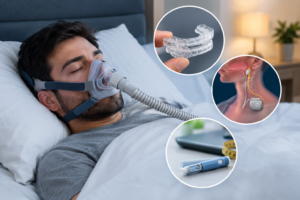
A proper sleep study in Dallas can help identify whether snoring is harmless or part of a larger breathing disorder. In many cases, testing can even be done from home now, which eases a lot of anxiety for patients who dread overnight labs.
And yes, people often ask whether sleep apnea only affects older adults or people who are overweight.
Not necessarily.
Thin patients get diagnosed, too. So do younger adults. Even athletes sometimes. Human bodies are a little messier than neat internet checklists.
Insomnia That Lasts More Than A Few Weeks Shouldn’t Be Ignored
Everyone goes through restless periods occasionally. Grief. Work stress. New babies. Life happens.
But ongoing insomnia becomes something else entirely.
If falling asleep regularly takes more than 30 minutes, or if someone wakes repeatedly throughout the night and struggles to fall back asleep, the nervous system may be stuck in an unhealthy cycle that rarely fixes itself through willpower alone.
And insomnia can become emotionally complicated after a while.
People begin fearing bedtime itself. The clock-watching starts. Midnight turns into 2 a.m., then 3. The next day becomes another blurry attempt to function normally while pretending everything’s fine.
It’s exhausting in a very private way.
A qualified sleep doctor in Dallas can evaluate whether insomnia is related to anxiety, circadian rhythm disruptions, breathing disorders, medications, or other medical conditions that often overlap with poor sleep.
Sometimes treatment involves behavioral therapy. Sometimes testing. Sometimes, small routine changes that sound almost too simple to matter, until they do.
Sleep medicine tends to work like that. Quiet adjustments. Gradual relief.
Falling Asleep During the Day Is a Red Flag
Daytime sleepiness is one of the clearest signs that nighttime sleep may not be functioning properly.
This goes beyond feeling mildly tired after lunch.
The concern starts when someone struggles to stay awake while driving, zones out during conversations, or needs constant naps just to make it through the day. Those symptoms can point toward disorders like narcolepsy, severe sleep apnea, or fragmented sleep architecture.
And oddly enough, many patients minimize it.
Probably because modern culture rewards exhaustion. Being overworked gets worn like a badge sometimes. People laugh about surviving on four hours of sleep as if the body won’t eventually protest.
But persistent daytime sleepiness can become dangerous. Especially behind the wheel.
The National Heart, Lung, and Blood Institute notes that insufficient sleep affects reaction time, decision-making, and overall cognitive performance in ways similar to alcohol impairment.
Not exactly a small thing.
Mood Changes and Brain Fog Can Sometimes Begin With Sleep
Here’s the part many people don’t connect immediately: poor sleep often shows up emotionally before it shows up physically.
Short tempers. Anxiety spikes. Difficulty concentrating. Low motivation. Feeling detached or emotionally flat.
When the brain isn’t cycling properly through restorative sleep stages, emotional regulation suffers. That doesn’t mean every bad mood stems from sleep deprivation, obviously. Humans are complicated. But sleep disorders quietly amplify almost everything else.
And because the symptoms feel psychological, some patients spend years chasing answers in other directions first.
Then, eventually, after a proper evaluation or a Dallas sleep study, the missing piece finally appears.
That realization can feel oddly emotional. Relief mixed with frustration. Like discovering a smoke detector had been chirping quietly in the background for years without anyone fully hearing it.
A Sleep Study Isn’t As Intimidating As People Imagine
A lot of hesitation comes from fear of the testing process itself.
People picture cold hospital rooms, tangled wires, strangers watching them sleep. Understandable concern, honestly.
But modern sleep testing has changed quite a bit. Many patients now qualify for home sleep testing, depending on symptoms and medical history. The equipment is typically simple, compact, and designed to track breathing patterns, oxygen levels, and sleep interruptions overnight.
For more complex cases, in-lab studies may still be recommended. But even then, the goal isn’t to create discomfort. It’s to finally understand why the body hasn’t been resting properly.
And once there’s clarity, treatment becomes much more targeted.
That alone often gives people hope again.
Sometimes, The Body Has Been Asking For Help Quietly
Sleep disorders rarely announce themselves dramatically at first.
They whisper.
Through headaches. Irritability. Afternoon crashes. Forgotten conversations. Relationships strained by snoring. Mornings that somehow feel harder than they should.
People adapt for surprisingly long periods before realizing how exhausted they’ve actually become.
But good sleep changes things. Not overnight necessarily. More gradually than that. The mind sharpens again. Energy steadies. Patience returns. Even small joys feel easier to access.
A little less surviving. A little more living.
And sometimes, the first step toward that shift is simply speaking with a trusted sleep doctor in Dallas who knows how to listen carefully to what the body has been trying to say all along.
If exhaustion, snoring, insomnia, or constant daytime fatigue have started affecting daily life, it may be time to stop guessing and get real answers. Schedule a professional sleep testing consultation to better understand what’s disrupting your sleep and explore treatment options that can help restore healthier, more restful nights.