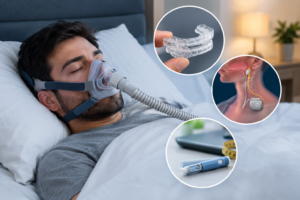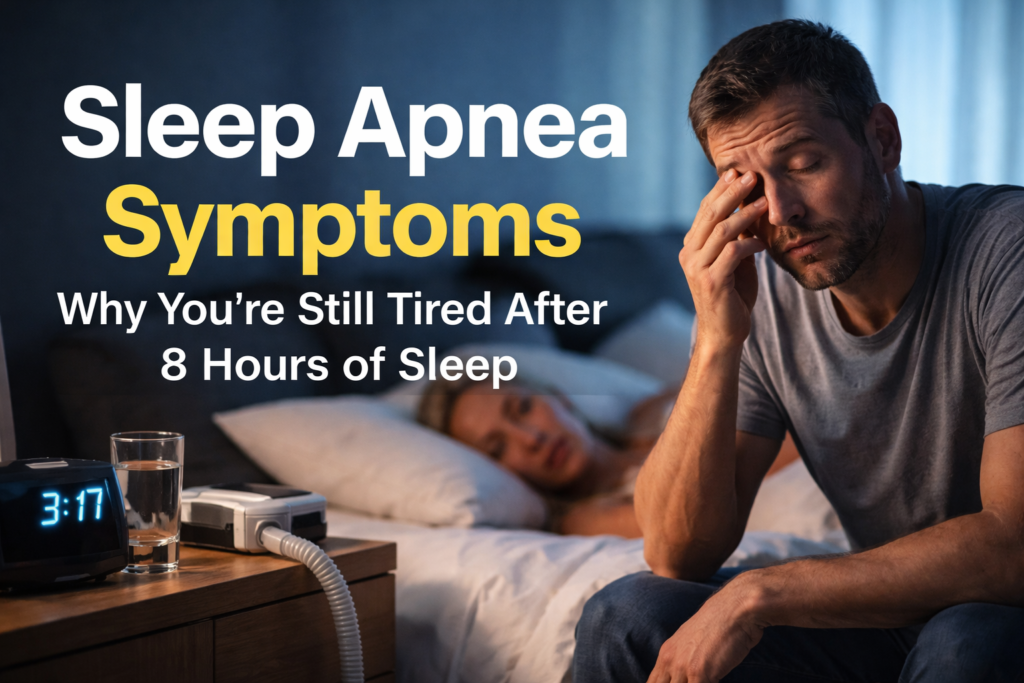
There’s a particular kind of tiredness that doesn’t quite make sense.
Not the obvious kind. Not the “slept at 3 AM, woke at 7” exhaustion. This one is quieter. Stranger. You go to bed on time, maybe even proud of it. Eight hours later, you wake up… and something feels off.
Heavy. Foggy. Like the night didn’t fully happen.
At first, it’s easy to brush it aside. A bad night. Stress. Maybe too much screen time. But when it keeps repeating, night after night, a different question starts to linger:
Why am I tired after sleeping 8 hours?
That question shows up more often than people admit. And sometimes, it’s pointing somewhere deeper than expected.
What Sleep Should Feel Like (But Often Doesn’t)
Sleep, when it’s working the way it should, has a kind of rhythm to it. The body settles, cycles through different stages, repairs, resets. You wake up—not necessarily bouncing out of bed—but at least… clearer. Lighter.
When that doesn’t happen consistently, it usually means something is interrupting that rhythm.
Not always in ways that are obvious.
Some people remember waking up. Others don’t. But the body always keeps score.
Sleep Apnea Symptoms That Don’t Always Look Like “Sleep Problems”
Most people think of sleep apnea as loud snoring. And yes, that’s often part of it. But it’s only one piece.
The more subtle sleep apnea symptoms tend to show up during the day:
Persistent fatigue, even after a full night’s sleep
Morning headaches that fade slowly
Difficulty focusing, almost like a low-level haze
Irritability that feels… unearned
A strange dependence on caffeine just to feel functional
It’s easy to misread these as stress or burnout. And sometimes they are. But when they come with disrupted breathing at night, something else is going on.
The body, quite literally, isn’t getting uninterrupted rest.
The Quiet Disruption: Breathing That Keeps Breaking
Sleep apnea works in a way that feels almost unfair.
You fall asleep. Everything seems fine. And then, somewhere in the night, breathing pauses. Sometimes briefly. Sometimes longer than it should.
The brain notices. It has to.
So it nudges the body awake just enough to restart breathing.
Not fully awake. Not enough to remember. Just enough to interrupt the cycle.
This can happen dozens, even hundreds of times in a single night.
And the result?
Sleep that looks complete on the clock… but never truly settles.
Waking Up Gasping for Air at Night
For some, the signs are harder to ignore.
There’s that sudden jolt awake. A sharp inhale. A moment of confusion. Maybe even a bit of panic before things calm down again.
Waking up gasping for air at night isn’t something the body does casually.
It’s a signal. A fairly urgent one.
But even then, people hesitate. They wait. They rationalize. Maybe it was a dream. Maybe just anxiety.
That hesitation is understandable. No one wants to assume something is wrong.
Still, the body tends to repeat what it needs to say.
Signs You Have Sleep Apnea (Even If You’re Not Sure Yet)
There’s rarely a single dramatic moment that confirms it.
Instead, it’s usually a pattern. Small things adding up.
A partner mentions loud snoring, sometimes with pauses. There’s daytime fatigue that doesn’t improve with rest. Memory feels slightly off. Focus slips more than it used to.
These are often the early signs that you have sleep apnea.
Not loud alarms. More like quiet taps on the shoulder.
And they’re easy to miss. Especially when life is already busy, already full.
Why the Body Feels So Tired, Even After “Enough” Sleep
It comes back to fragmentation.
Sleep isn’t just about duration. It’s about continuity. Depth. The ability to move through stages without interruption.
When breathing keeps breaking that flow, the deeper stages of sleep—the ones responsible for real restoration—get cut short.
So even after eight hours, the body feels like it’s been working all night.
Because, in a way, it has.
Understanding What’s Actually Happening During Sleep
This is where proper evaluation changes things.
A professional sleep assessment doesn’t guess. It observes. Measures breathing patterns, oxygen levels, interruptions—details that aren’t visible from the outside.
👉 Home sleep testing services
make this process simpler than people expect.
And for a broader consultation,
👉 Dallas Sleep’s comprehensive sleep evaluation
offers a more complete understanding of what’s happening beneath the surface.
No assumptions. Just clarity.
A Small Shift That Can Change Everything
There’s something subtle but important that happens when sleep starts improving.
Energy returns, yes. But it’s more than that.
Focus sharpens. Mood stabilizes. That background fatigue—the one that felt almost normal—begins to lift.
It doesn’t happen overnight. And it doesn’t look dramatic from the outside.
But internally, it feels like getting something back that had slowly gone missing.
When to Take It Seriously
If the question “Why am I tired after sleeping 8 hours?” keeps coming back…
If nights feel restless, even when they appear full…
If there are moments of waking up breathless…
It may be time to look a little closer.
For a broader medical context, you can also refer to the CDC’s guide on sleep apnea
Not with panic. Just with attention.
Quietly Said
Most people don’t realize how much poor sleep has been affecting them until it starts to improve.
That’s the strange part.
The baseline shifts so gradually that exhaustion begins to feel normal.
Until it isn’t.
And sometimes, it starts quietly, just noticing the fatigue, the broken nights, those small, easy-to-dismiss signals… and not brushing them aside this time.
Not dramatically.
Just… steadily.