Sleep becomes strange when rest stops feeling like rest.
It is rarely identified as a problem initially. It begins as a complaint, progresses into a habit, and eventually becomes normalized as “just how things are.”
But sleep apnea doesn’t really stay quiet forever. It leaves traces, in the morning fog, in mid-day exhaustion, and in the way focus slips a little earlier than it used to.
And still… most people miss it.
At Dallas Sleep, this pattern shows up often enough that it almost feels familiar. Not dramatic cases. Not emergencies. Just long stretches of not realizing that sleep itself has been breaking apart.
What Sleep Apnea Actually Means (When It’s Not Just “Snoring”)
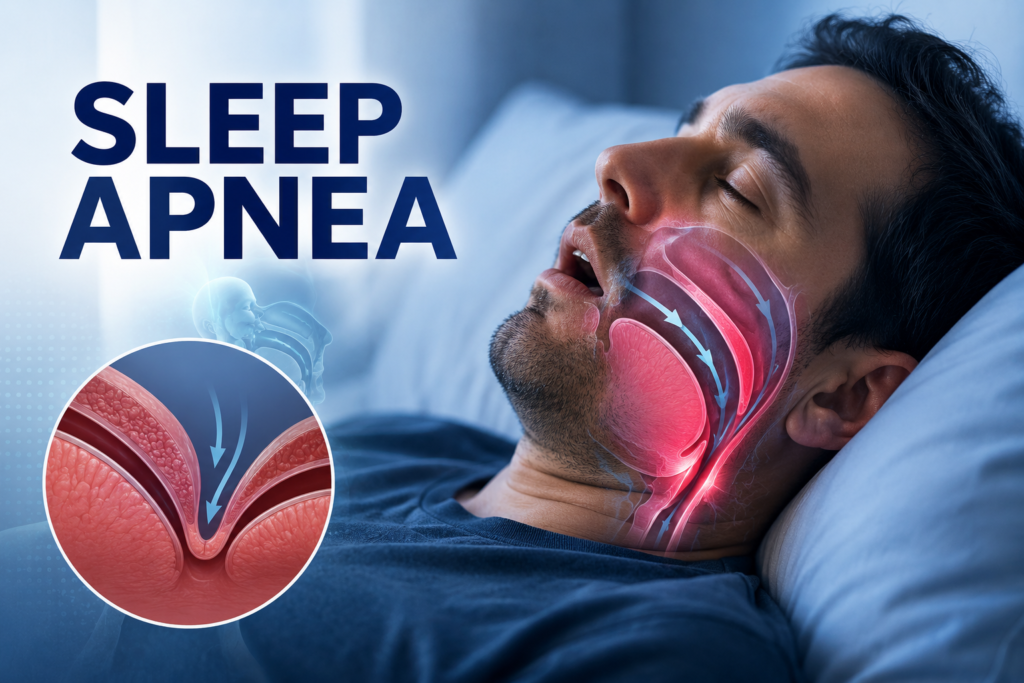
Sleep apnea is a condition where breathing repeatedly stops during sleep, reducing oxygen and fragmenting rest without full awareness.
That’s the clinical version. The lived version feels different. It feels like sleeping through the night but never quite arriving at rest.
Airway muscles relax too much. Airflow narrows or stops. Oxygen drops. The brain responds instantly—briefly pulling the body into lighter sleep just to restart breathing.
No memory of it. No awareness.
Just the consequence.
And that consequence builds slowly. A little fatigue here. A little irritability there. Until it becomes difficult to remember what “fully rested” used to feel like.
For many exploring sleep apnea treatment in Dallas, this is usually the first real shift. At this stage, it isn’t treatment yet, just an understanding of what has actually been happening.
Sleep Apnea Warning Signs That Don’t Always Look Like Symptoms
The warning signs of sleep apnea are often subtle, but they follow a pattern when viewed together.
It’s rarely one dramatic signal. Instead, it’s a collection of small things that don’t seem connected at first.
Nighttime signs (often noticed indirectly)
These usually come from someone else in the room. Or from recordings that feel slightly unsettling when played back.
- Loud, persistent snoring
- Breathing pauses followed by gasping or choking
- Restless sleep with frequent movement
- Sudden awakenings without a clear cause
- Night sweats not tied to temperature
There’s something particularly distinctive about the pauses. Not the sound itself, rather, the absence of it. A silence where breathing should be.
That silence is often the most important clue.
And it’s also the point where snoring and sleep apnea start to overlap in ways that are easy to miss without proper context.
Daytime symptoms (the ones that get explained away)
These feel less medical and more… everyday.
- Ongoing fatigue even after a long sleep
- Morning headaches that fade slowly
- Dry mouth or sore throat on waking
- Trouble focusing or staying mentally sharp
- Mood changes that feel slightly uncharacteristic
- Drowsiness during quiet or repetitive tasks
Most people adjust to these without realizing it. More coffee. Shorter patience. Slightly slower mornings.
It doesn’t feel like an illness. It feels like a lifestyle.
Until it doesn’t.
This is often when sleep apnea symptoms become more noticeable, not only because they change, but they finally add up.
Why Snoring Can’t Always Be Dismissed as Harmless
Snoring becomes clinically relevant when it includes irregular rhythm, pauses, or gasping.
Simple snoring is vibration.
Sleep apnea-related snoring is an interruption.
That difference is small in language, but meaningful in medicine.
Because interruption means airflow is not consistent. And inconsistent airflow means oxygen is not stable. And unstable oxygen changes how deeply the body can recover overnight.
This is why many patients only discover the full picture after a sleep study Plano evaluation, where the invisible pattern becomes measurable.
Not guessed. Not assumed. Just observed.
Who Is Actually at Risk (And Why It Often Goes Undetected)
Sleep apnea risk is shaped by anatomy, age, and physiology. However, it doesn’t always present predictably.
Certain risk factors are well known:
- Age over 40
- Increased neck circumference
- Weight gain or obesity
- Alcohol use before sleep
- Chronic nasal congestion
- Family history of sleep apnea
But real-world cases don’t always follow neat categories.
Some individuals develop symptoms gradually after small lifestyle shifts. Others notice changes only when fatigue begins affecting work or attention. And occasionally, there’s no obvious trigger at all.
That uncertainty is part of why early evaluation matters more than certainty itself.
Because sleep apnea rarely announces itself clearly. It accumulates.
What Untreated Sleep Apnea Does Over Time
Untreated sleep apnea creates a repeated stress cycle that affects cardiovascular, cognitive, and metabolic systems.
Each breathing pause triggers a response: oxygen drops, heart rate increases, stress hormones rise.
One night, the body manages it.
Hundreds of nights… it begins to strain.
Long-term research and clinical observation link untreated sleep apnea to:
- Elevated blood pressure
- Increased cardiovascular risk
- Reduced cognitive performance
- Mood instability and irritability
- Higher risk of daytime accidents
Institutions such as the National Heart, Lung, and Blood Institute have consistently highlighted these risks, especially in relation to heart and metabolic health.
It’s not about sudden outcomes. It’s about repetition over time.
Sleep, quietly failing its job.
How Diagnosis Actually Happens (And Why It Feels Less Intimidating Than Expected)
Sleep apnea is diagnosed through a sleep study that measures breathing, oxygen, and sleep quality.
There are two primary approaches:
In-lab sleep study
A monitored overnight test that tracks brain activity, breathing patterns, oxygen levels, and heart rhythm. It’s detailed, structured, and comprehensive.
Home sleep test
A simplified device used at home that records airflow and oxygen levels during normal sleep.
Both approaches are widely used depending on symptoms and clinical judgment.
What often surprises people is not the technology—it’s how straightforward it feels once started. The anxiety usually belongs more to anticipation than to the actual process.
For those considering sleep study Plano services, this step often becomes less about testing and more about clarity.
Treatment: Simple in Concept, Significant in Impact
Sleep apnea treatment focuses on keeping the airway open throughout sleep to restore consistent breathing.
The most common approach is CPAP therapy, which delivers steady airflow to prevent airway collapse. Other options include oral appliances, positional therapy, and, in specific cases, surgical intervention.
The early changes are usually subtle. Slightly clearer mornings. Less fog. Fewer headaches that linger into the day.
Then something shifts more noticeably. Energy stops feeling borrowed. Focus stops feeling forced.
Not instantly. But gradually, in a way that feels almost rediscovered.
Dr. Raj Kakar and the Care Behind Dallas Sleep
Behind Dallas Sleep, the work has been shaped over many years by Raj Kakar, MD, a snoring and sleep apnea specialist based in Plano, Texas.
Since 2006, Dr. Kakar has been managing Dallas Sleep, also known as the Dallas Center for Sleep Disorders. Over time, the clinic has expanded across multiple locations in the DFW region, driven by growing demand and a consistent focus on accessible sleep care.
He also founded the Snoring & Fatigue Center, created specifically to improve access for patients with high-deductible insurance plans or no insurance at all. The intent behind it is simple, almost understated: sleep care should not feel out of reach.
Dr. Kakar’s academic path reflects a strong clinical foundation. He completed his Bachelor of Science at Louisiana State University, earned his MD and Master of Public Health from Tulane University, and completed sleep fellowship training at the Stanford University Sleep Center of Excellence.
With a background in internal medicine, his understanding extends beyond sleep alone—into how sleep disorders interact with cardiovascular, metabolic, and cognitive health.
His areas of expertise include:
- Snoring and sleep apnea
- Insomnia and chronic fatigue
- Daytime sleepiness
- Narcolepsy and complex sleep disorders
But in practice, what patients often notice first is not specialization. It’s attention. The kind that doesn’t rush conclusions.
When It’s Time to Stop Guessing
Sleep evaluation becomes appropriate when symptoms persist and begin affecting daily functioning.
That may look like:
- Regular snoring with observed pauses
- Persistent daytime fatigue
- Morning headaches or dry mouth
- Difficulty staying alert during routine activities
- High blood pressure that is difficult to manage
Not every sign needs to be present. Patterns matter more than perfection.
A Simple Next Step Toward Better Sleep
Sleep apnea does not usually improve on its own. That said, it responds well once identified.
For individuals noticing these patterns, the next step is often not complicated. It is simply clarity, through consultation and testing.
More information about evaluation and treatment is available through Dallas Sleep.
👉 Take the next step here: Sleep evaluation and consultation at Dallas Sleep
Not urgent in tone. Just important in timing.
Because sleep, once it starts working properly again, changes more than rest. Quietly, it changes how days begin.