Sleep apnea rarely announces itself loudly in the beginning. It starts quietly. A bit of snoring here, a restless night there, morning fatigue that feels oddly normal after a while. And somewhere in that slow normalisation, something more serious begins to build underneath.
Not dramatic at first. Just persistent. Repetitive. Like a small strain that the body keeps absorbing… until it can’t.
The connection between untreated sleep apnea and heart health is one of those medical realities that tends to be overlooked until it becomes impossible to ignore.
What Untreated Sleep Apnea Is Actually Doing to the Body
At its core, untreated sleep apnea repeatedly interrupts breathing during sleep, causing oxygen levels to drop again and again through the night.
The simple truth: the body never fully rests.
Each pause in breathing triggers a stress response — almost like a silent alarm going off. Heart rate rises. Blood pressure spikes. The brain briefly wakes the body up just enough to restart breathing.
And then it happens again. And again.
Over time, this cycle creates a constant internal strain. It is not just poor sleep. It is repeated physiological stress, night after night.
More about sleep disorder evaluation and care can be explored through trusted sleep resources, which focus on diagnosing and managing these patterns early.
How Sleep Apnea Quietly Impacts Heart Health
The link between sleep apnea and the heart is not abstract. It is mechanical, hormonal, and deeply biological.
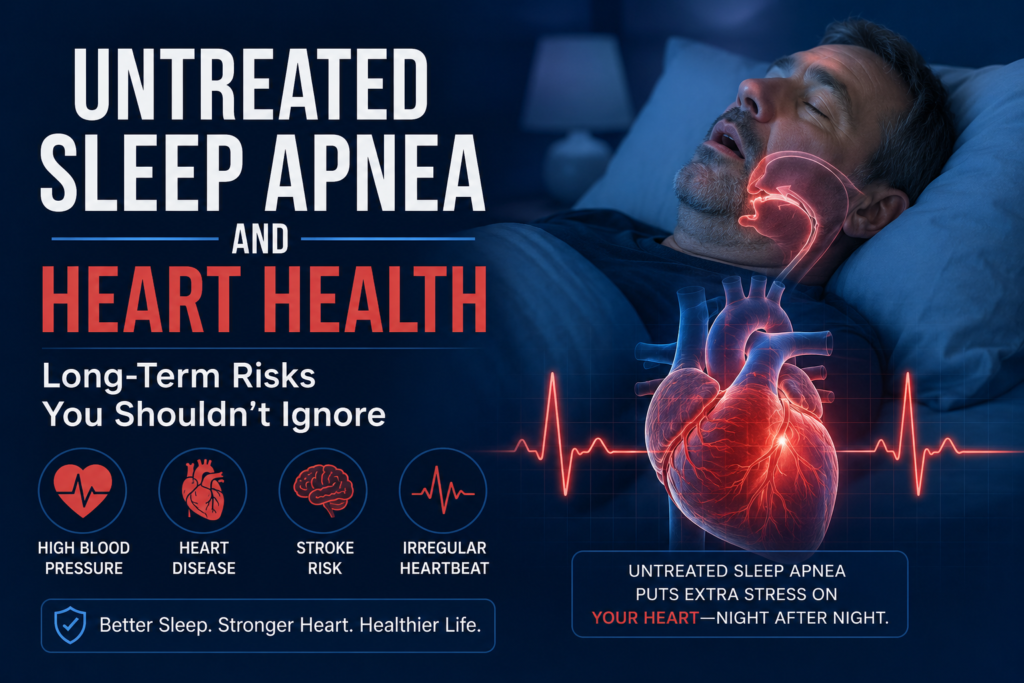
Untreated sleep apnea forces the heart to operate under repeated stress conditions, even during rest.
When oxygen levels drop during apnea events, blood vessels constrict. The heart responds by working harder to push oxygen through the body. This repeated cycle slowly increases cardiovascular load.
Over time, this can contribute to:
- Persistent high blood pressure
- Increased strain on the heart muscle
- Greater risk of irregular heartbeat patterns
- Reduced oxygen efficiency during sleep cycles
It is not one single event that causes damage. It is repetition. Thousands of micro-events over months and years.
And yet, many people still associate it only with snoring.
Long-Term Risks That Often Go Unnoticed
The most concerning aspect of untreated sleep apnea is not immediate danger — it is the delayed consequences.
The damage builds quietly before symptoms become obvious.
Some of the long-term risks include:
1. Chronic High Blood Pressure
Even when awake, the cardiovascular system may stay in a heightened stress state. This makes blood pressure harder to control over time.
2. Increased Risk of Heart Disease
Continuous oxygen disruption can contribute to inflammation and arterial stress, both linked to long-term heart disease.
3. Stroke Risk
Reduced oxygen supply during sleep can affect vascular health in the brain, increasing vulnerability over time.
4. Heart Rhythm Irregularities
Repeated oxygen drops and surges in stress hormones can interfere with normal heart rhythm stability.
None of these appears overnight. They accumulate slowly, often unnoticed until a medical evaluation reveals the connection.
Signs That Often Get Dismissed Too Early
Sleep apnea rarely looks dramatic in daily life. It tends to disguise itself as ordinary fatigue.
Symptoms often feel too “normal” to raise concern.
Some early indicators include:
- Loud or consistent snoring
- Waking up feeling unrefreshed
- Morning headaches that fade during the day
- Daytime fatigue or brain fog
- Gasping or choking during sleep (often noticed by others)
- Difficulty maintaining focus
These signs are easy to explain away. Stress. Age. Lifestyle. Poor sleep habits.
But when they cluster together, they tell a different story.
Why Diagnosis Often Starts with a Sleep Study
Sleep apnea cannot be confirmed by symptoms alone. It requires observation of what happens during sleep itself.
A sleep study is the most reliable way to identify sleep apnea and understand its severity.
There are typically two approaches:
Home Sleep Study
Conducted in a familiar environment. Useful for identifying moderate to severe sleep apnea in many cases.
Lab-Based Sleep Study
A more detailed evaluation was performed under clinical monitoring. It records breathing patterns, oxygen levels, and sleep stages in depth.
Both options help determine not just whether sleep apnea exists, but how strongly it is affecting the body.
More information on diagnostic options and evaluations can be found through
offered through specialized sleep clinics focused on accurate assessment and treatment planning.
Treatment Is Not One-Size-Fits-All
Sleep apnea treatment is not just about machines or devices. It is about restoring stable breathing during sleep and reducing cardiovascular strain.
Effective treatment reduces both sleep disruption and heart-related risks.
Common approaches include:
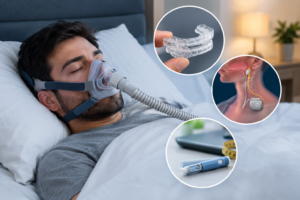
CPAP Therapy
Continuous airflow support to keep airways open during sleep. Still considered one of the most effective treatments for moderate to severe sleep apnea.
CPAP Alternatives
Not everyone adapts easily to CPAP. Alternatives may include:
- Oral appliance therapy
- Positional therapy
- Lifestyle and weight-related interventions
- Surgical options in specific cases
Exploring options like
can help patients understand the broader treatment landscape beyond traditional approaches.
Why Early Action Matters More Than It Feels Like It Does
Sleep apnea does not always feel urgent. That is part of the challenge. It rarely creates immediate alarms — just slow changes in energy, focus, and overall health.
Early diagnosis prevents long-term cardiovascular strain.
When identified early, treatment can significantly reduce risks and improve sleep quality. Blood pressure stabilizes. Energy returns. The heart is no longer working against constant nighttime stress.
But when ignored, the same condition quietly reshapes long-term health in ways that are harder to reverse. Research from the American Heart Association and the National Heart, Lung, and Blood Institute continues to show strong connections between untreated sleep apnea, cardiovascular strain, and long-term heart health complications.
A Quiet but Important Decision Point
There is a moment many people reach — not dramatic, just reflective. A sense that sleep has not felt “normal” for a while. That fatigue is no longer just tiredness. That something underlying might be worth checking.
That moment matters.
Sleep apnea is not always obvious, but its impact on the heart is well established. And the earlier it is understood, the more manageable it becomes.
For those looking to explore diagnosis or treatment options, specialized care is available through
where sleep disorders are assessed with a focus on both sleep quality and long-term health outcomes.
If there is one takeaway, it is simple:
Sleep is not just rest. It is a repair.
And when breathing is interrupted during that process, the body carries the cost in ways that only become visible later.
The heart always remembers what the night goes through. And sometimes, understanding the cause behind chronic exhaustion, snoring, or interrupted sleep is the first real step toward feeling better again.
Exploring sleep apnea evaluation and treatment options, or learning more about sleep studies and diagnostic testing, can help patients move from uncertainty toward clearer answers and healthier sleep.